
Sildenafil and tadalafil combination therapy is an emerging strategy for selected men with erectile dysfunction (ED) who have an incomplete response to a single phosphodiesterase type 5 (PDE5) inhibitor. The rationale is pharmacologic rather than simply additive: sildenafil has a relatively rapid, shorter-acting profile, while tadalafil remains active much longer. Combining them may broaden the treatment window, but it also increases total PDE5-inhibitor exposure and requires careful physician screening. The evidence is promising but limited, and dual therapy should not be improvised without a prescription.
How Sildenafil and Tadalafil Affect Erectile Physiology
An erection begins with sexual stimulation and nitric oxide release from nerves and vascular endothelium in the penis. Nitric oxide activates guanylate cyclase, raising cyclic guanosine monophosphate (cGMP). This signaling molecule relaxes smooth muscle in the corpora cavernosa, increases arterial inflow, and helps compress the veins that normally drain the penis. PDE5 breaks down cGMP and ends that signal.
Sildenafil and tadalafil both inhibit PDE5. They do not directly create sexual desire or automatically produce an erection; sexual stimulation and intact neural signaling are still required. By slowing cGMP degradation, they may support a firmer and more sustainable erectile response in appropriately selected men.
The two drugs differ in their pharmacokinetic profiles. Sildenafil usually reaches peak blood concentrations within approximately one hour and has a terminal half-life of about four hours. A high-fat meal can delay absorption and reduce the speed of onset. Tadalafil generally reaches peak concentrations within about two hours and has a half-life near 17.5 hours, which supports activity for up to 36 hours in some men. Food has little clinically meaningful effect on tadalafil absorption.
These differences matter. A shorter-acting agent can concentrate support around a planned sexual event, while a longer-acting agent may create a wider window with less time pressure. Dual PDE5 inhibition attempts to combine those characteristics. It does not create a new biological pathway: both ingredients act on the same enzyme, so the potential benefit must be weighed against overlapping adverse effects.
What Clinical Evidence Shows About Sildenafil and Tadalafil
PDE5 inhibitors are well established as first-line oral treatments for ED. A 2026 network meta-analysis of 83 double-blind, placebo-controlled trials involving 6,029 participants compared on-demand PDE5-inhibitor regimens. Sildenafil 100 mg and 50 mg produced odds ratios of 9.06 and 7.90, respectively, for erectile-function improvement versus placebo; tadalafil 20 mg followed with an odds ratio of 7.13 [1]. Those results support the efficacy of each drug individually, but they should not be interpreted as direct proof that using two agents together is superior.
Direct combination evidence is smaller. Cui and colleagues randomized 180 men to tadalafil 5 mg daily alone or tadalafil 5 mg daily with sildenafil 50 mg as needed during the early treatment period [2]. The combination group showed greater improvements on several International Index of Erectile Function and Sexual Encounter Profile measures, particularly among men with severe ED. The incidence of adverse events did not differ significantly between groups. However, this was one study using specific doses and timing; its findings cannot automatically be generalized to every dual-agent formulation or every patient.
A 2024 clinical series reported on daily tadalafil 5 mg plus sildenafil 100 mg on demand in men who had not responded adequately to PDE5-inhibitor monotherapy [3]. After six weeks, erectile-function and rigidity scores improved, and reported adverse effects were generally minor. The report was a conference abstract rather than a large blinded randomized trial, so it provides a clinical signal, not definitive comparative evidence.
Broader evidence also supports combination strategies for difficult-to-treat ED, although most combinations pair a PDE5 inhibitor with a treatment from another category. A 2021 systematic review and meta-analysis included 44 studies and 3,853 men [4]. Across varied strategies, combination therapy improved International Index of Erectile Function scores by a mean 1.76 points compared with monotherapy. The authors found encouraging results for adding daily tadalafil in selected nonresponders, but emphasized that the underlying data were limited and heterogeneous.
Overall, clinical studies suggest that a dual regimen may support erectile function in some men with moderate-to-severe ED or an incomplete response to monotherapy. It remains a physician-directed option rather than a universal starting point. Better trials are needed to establish the best doses, timing, long-term safety, and which patient profiles are most likely to benefit.
Why a Dual Formulation Is Different
A combined formulation may offer a practical advantage when both a broad treatment window and stronger event-specific support are desired. Tadalafil's prolonged half-life means meaningful drug exposure may persist through the following day, while sildenafil's shorter profile can provide a more concentrated period of inhibition. For some men, this may reduce the need to choose between spontaneity and planned dosing.
Yet “two drugs” should not be equated with “twice the effect.” Sildenafil and tadalafil compete within the same nitric oxide-cGMP pathway. Once PDE5 inhibition is sufficient, additional exposure may produce diminishing benefit while increasing headache, flushing, nasal congestion, indigestion, back or muscle discomfort, light-headedness, and blood-pressure reduction. Individual response varies with age, cardiovascular health, diabetes, nerve injury, medication use, anxiety, alcohol intake, and the underlying severity of ED.
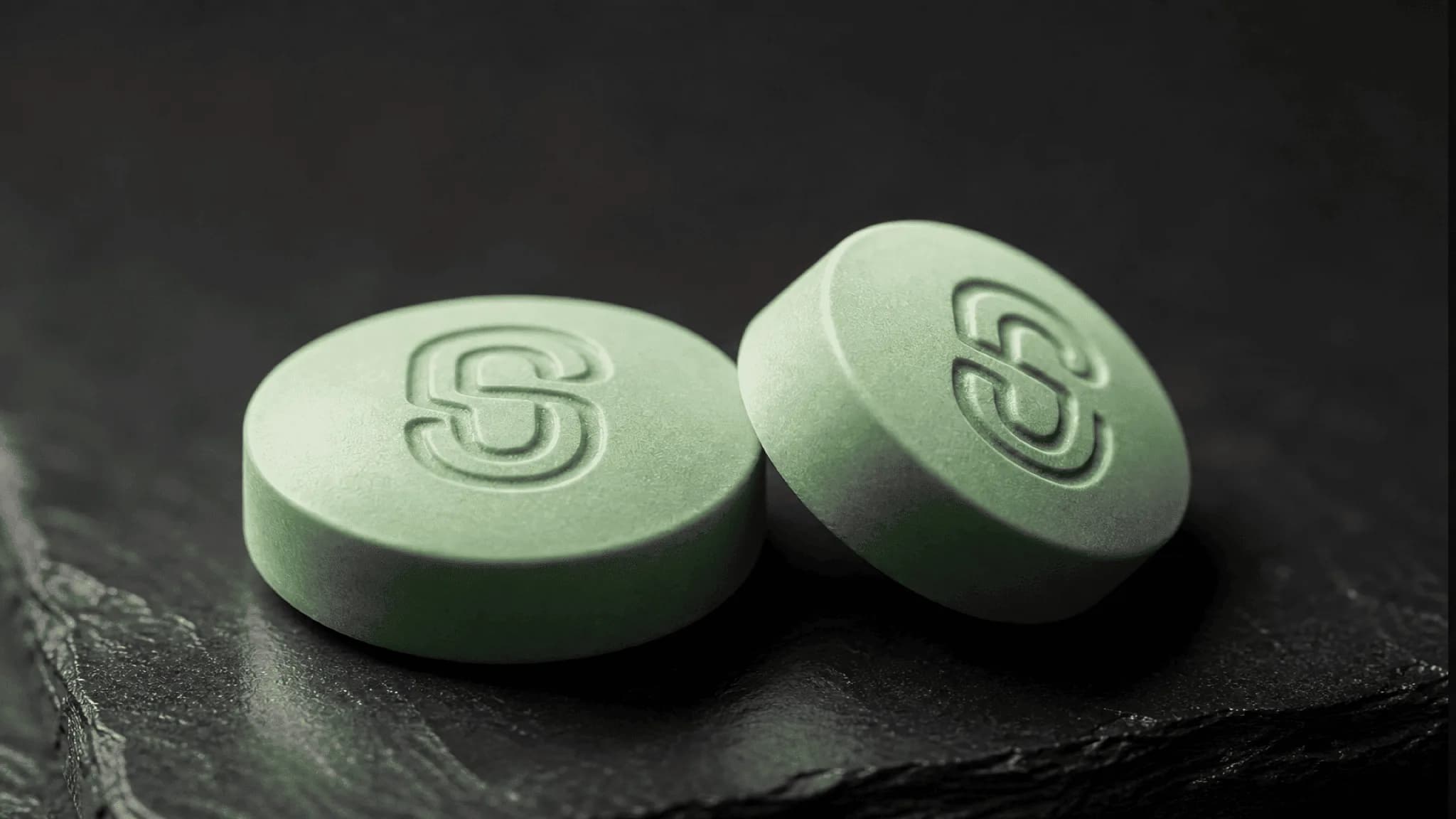
The Mach 1 formulation contains sildenafil 70 mg and tadalafil 20 mg. That exact fixed-dose formulation has not been established by the studies summarized above; available combination studies used different schedules and doses. The clinical rationale therefore rests on the known pharmacology of both ingredients and limited combination evidence, not on a trial proving that this precise formulation is superior to standard monotherapy.
This distinction is essential in evidence-based prescribing. A clinician should first confirm that an apparent treatment failure is genuine. Common reasons for PDE5-inhibitor nonresponse include taking a dose too soon before sex, using sildenafil after a heavy meal, insufficient sexual stimulation, too few treatment attempts, uncontrolled diabetes or hypertension, severe vascular disease, low testosterone when clinically indicated, and performance anxiety. Correcting those factors may restore response without escalating therapy.
Who May Be Considered—and Who Should Avoid It
Potential candidates are adult men with a confirmed ED diagnosis who have obtained insufficient benefit from appropriately used single-agent therapy and can safely tolerate PDE5 inhibition. Men with more severe baseline ED may be of particular interest because the randomized combination study found its clearest signal in that subgroup [2]. A physician may also consider whether a broader dosing window could reduce timing-related anxiety.
Dual therapy is not appropriate for everyone. Nitrates such as nitroglycerin and isosorbide are an absolute contraindication because combining them with PDE5 inhibitors can cause a dangerous fall in blood pressure. The soluble guanylate cyclase stimulator riociguat is also contraindicated. Men taking alpha blockers, multiple antihypertensives, or drugs that strongly inhibit CYP3A4 may need additional caution, dose adjustment, or a different approach.
Medical review is especially important for men with unstable angina, recent heart attack or stroke, severe hypotension, uncontrolled hypertension, significant liver or kidney impairment, inherited retinal disorders, or a history of non-arteritic anterior ischemic optic neuropathy. Sexual activity itself places a cardiovascular demand on the body, so men with unstable cardiovascular disease need assessment before ED treatment.
Emergency symptoms require prompt action. An erection lasting four hours or longer needs immediate medical care to reduce the risk of tissue injury. Sudden vision loss, sudden hearing loss, chest pain, fainting, or a severe allergic reaction also require urgent evaluation. If chest pain develops after taking a PDE5 inhibitor, the patient should tell emergency personnel exactly what was taken and when; nitrates must not be self-administered.
ED can also be an early marker of systemic vascular disease. New or worsening symptoms justify assessment of blood pressure, glucose or A1C, lipids, smoking, sleep, exercise, body composition, and cardiovascular risk. Treating the erection without investigating its cause can miss an opportunity for earlier disease detection.
How Physician-Supervised Treatment Is Used
A dual PDE5 formulation should be taken only according to the prescriber's instructions. Patients should not add separate sildenafil, tadalafil, vardenafil, or other ED products unless the prescriber explicitly directs it. Because tadalafil persists for an extended period, doses taken on different days can still overlap. More frequent dosing does not guarantee a better response.
Alcohol deserves particular caution. Heavy drinking can independently impair erections and, when combined with vasodilating medications, may increase dizziness, headache, rapid heart rate, or orthostatic hypotension. Grapefruit products and certain antibiotics, antifungals, HIV medications, and other CYP3A4 inhibitors can alter PDE5-inhibitor exposure; a complete medication and supplement list should be reviewed during prescribing.
Effectiveness is best assessed over multiple appropriately timed attempts rather than one encounter. Clinicians may ask about erection hardness, penetration, maintenance, side effects, timing, food intake, and whether the treatment reduces or increases performance pressure. If response remains poor, the next step may be risk-factor management, psychosexual support, pelvic floor therapy, vacuum devices, injectable therapy, or urologic evaluation—not simply a higher dose.
Combination therapy should be one part of a broader plan. Regular aerobic exercise, smoking cessation, adequate sleep, moderate alcohol intake, weight management, and treatment of diabetes, hypertension, or dyslipidemia may support endothelial health and erectile function. These measures do not replace prescribed treatment, but they address disease processes that medication alone cannot reverse.
Conclusion
Sildenafil and tadalafil combination therapy has a coherent pharmacologic rationale: it pairs a shorter-acting PDE5 inhibitor with a longer-acting one. Each medication has strong evidence as monotherapy, while smaller studies suggest that selected men—particularly those with severe ED or incomplete monotherapy response—may experience additional benefit from physician-directed combination use. The evidence is not yet strong enough to treat dual therapy as routine for every patient, and overlapping adverse effects and cardiovascular contraindications make clinical screening essential.
If you're exploring clinically-formulated options, OnyxMD's Mach 1 combines sildenafil 70 mg with tadalafil 20 mg in a physician-prescribed treatment plan, starting with a free online assessment at questionnaire.getonyxmd.com. Additional evidence-based men's health articles are available in the OnyxMD blog.
These statements have not been evaluated by the FDA. This content is for informational purposes only and does not constitute medical advice.
References
Soliman T, et al. A comparative evaluation of on-demand phosphodiesterase-5 inhibitor efficacy in erectile dysfunction treatment: a systematic review and network meta-analysis of double-blind, placebo-controlled, randomized trials. The Journal of Sexual Medicine. 2026;23(7):qdag176. doi:10.1093/jsxmed/qdag176
Cui H, Liu B, Song Z, et al. Efficacy and safety of long-term tadalafil 5 mg once daily combined with sildenafil 50 mg as needed at the early stage of treatment for patients with erectile dysfunction. Andrologia. 2015;47(1):20-24. doi:10.1111/and.12216
Jamali M, Chmitah T, Bahri A, Louardi N, Alami M, Ameur A. Efficiency and safety of combining long-acting and short-acting PDE5 inhibitors. The Journal of Sexual Medicine. 2024;21(Supplement 2):qdae002.166. doi:10.1093/jsxmed/qdae002.166
Mykoniatis I, Pyrgidis N, Sokolakis I, et al. Assessment of combination therapies vs monotherapy for erectile dysfunction: a systematic review and meta-analysis. JAMA Network Open. 2021;4(2):e2036337. doi:10.1001/jamanetworkopen.2020.36337
Medical Disclaimer: The information provided on this website is for educational and informational purposes only and is not intended as medical advice. OnyxMD services should not be used to diagnose, treat, cure, or prevent any disease or medical condition. Always consult with a qualified healthcare provider before beginning any supplement regimen or health program.
FDA Disclaimer: These statements have not been evaluated by the Food and Drug Administration. This product is not intended to diagnose, treat, cure, or prevent any disease.
Individual Results: Results may vary. The experiences and testimonials presented on this website are individual results that may not be typical. Your experience may be different.
Telehealth Services: OnyxMD provides telehealth services in 47 states (excluding AK, MS, NJ) through licensed healthcare providers via our partner Beluga Health, P.A. Services are subject to clinical evaluation and may not be appropriate for all individuals. Prescriptions fulfilled by Strive Pharmacy LLC (License #99-9817) and EPIQ SCRIPTS LLC.